
Glaciers on one side, Dolomites on the other
Thirteen thousand square kilometres without a metre of plain, and three hundred lakes.
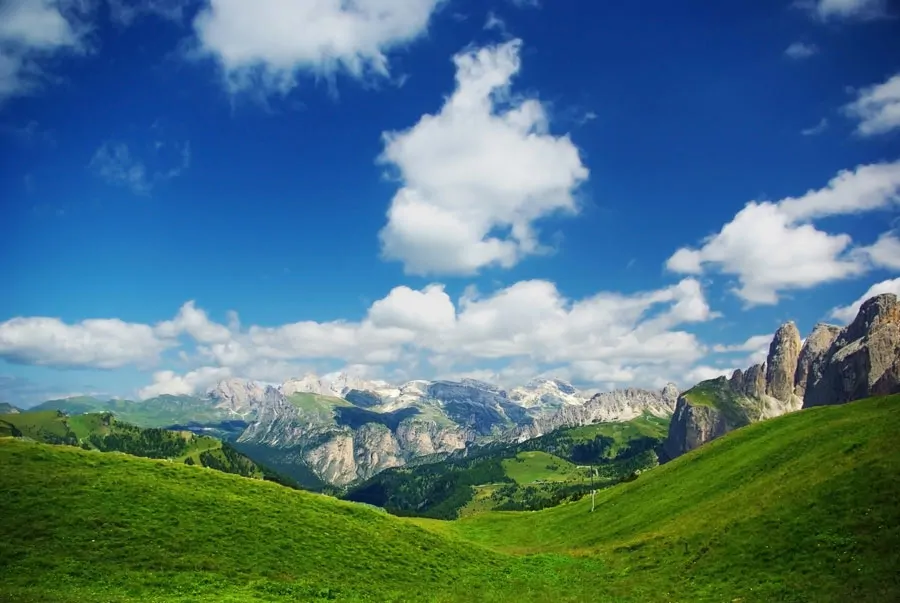
The region lies entirely within the Alps, and its two halves are made of different rock. To the west and north are the Rhaetian and Zillertal Alps, granite and gneiss, rounded summits and glaciers; to the east the Dolomites, which are limestone and dolomite, that is a sea floor two hundred and fifty million years old, lifted up and then eroded into towers and spires. The difference is visible with the naked eye from the valley.
The Dolomites
They have been a Unesco site since 2009, in nine separate systems spread across five provinces. Within the region are the Catinaccio and the Latemar above Bolzano, the Sassolungo and the Sella group in the centre, the Pale di San Martino and the Brenta Dolomites, which lie west of the Adige and are therefore the only ones detached from the rest. At sunset the pale rock takes on a red the locals call enrosadira.
The glaciers
The Ortles, at 3,905 metres, is the highest peak in the region and the heart of the Stelvio national park, which with its hundred and thirty thousand hectares is one of the largest in Italy. Further south the Adamello carries the most extensive glacier in the Italian Alps. These are mountains you look at from a distance or climb with a guide: they are not walks.
The lakes
There are hundreds of lakes, nearly all of them small and high up. The best known are Braies and Carezza, green because of the sediment; Molveno below the Brenta; Levico and Caldonazzo in the Valsugana, warm enough to swim in during the summer and ringed with campsites; and Resia in the Vinschgau, man made, with the bell tower of the drowned village standing out of the water. And then the northern tip of Garda, which is a lake of an entirely different kind.
The parks
Besides the Stelvio there are the Adamello Brenta nature park, the largest in Trentino, home to the only brown bear population in the Italian Alps, and Paneveggio Pale di San Martino, with the spruce forest that supplied violin soundboards for centuries. In Alto Adige there are seven provincial nature parks, covering nearly a sixth of the territory.