
Winter markets, brass bands and autumn grapes
The festivals here follow a farming calendar, and it shows.
The calendar of festivals follows the mountain year: the snow, the haymaking, the bringing down of the herds, the harvest, Advent. These are events that existed before tourism and that tourism has enlarged, but not invented.
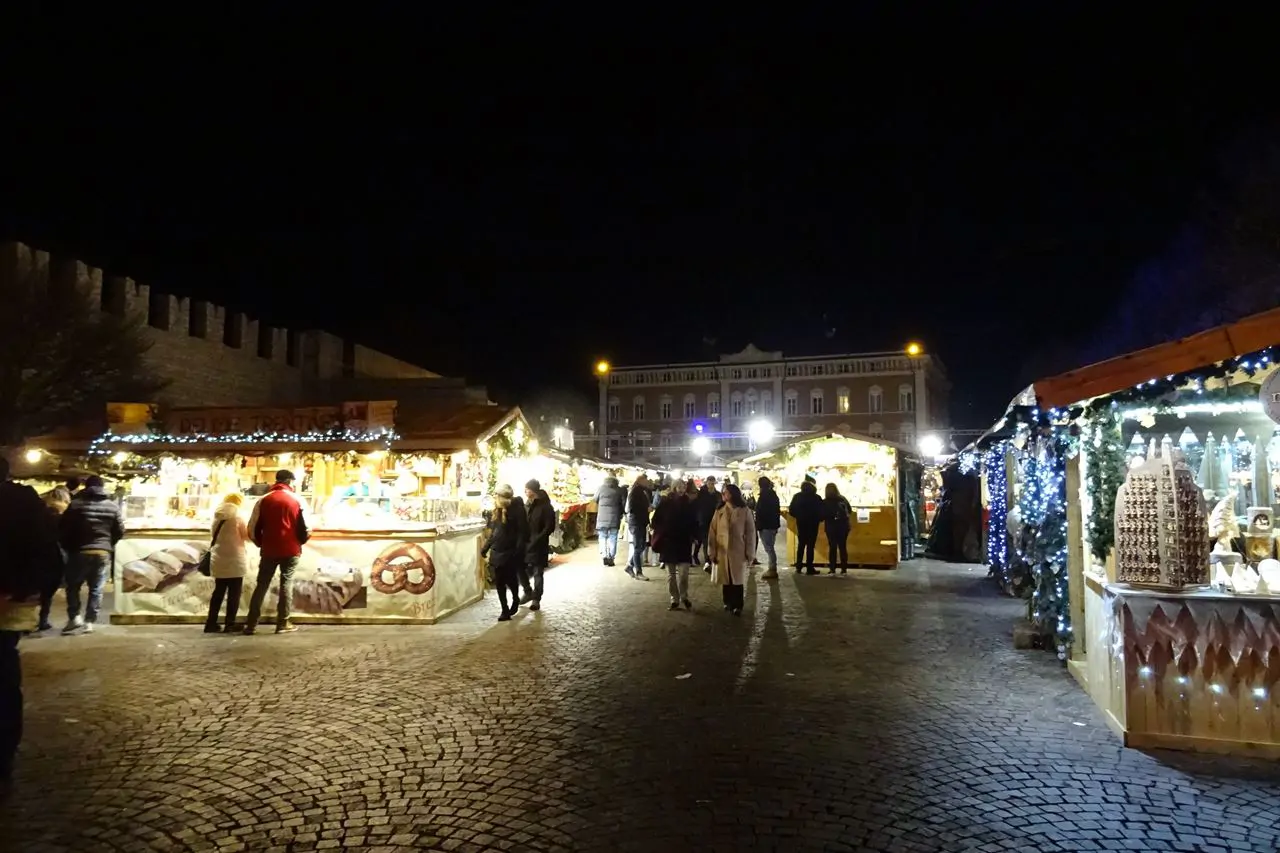
The Christmas markets
The Bolzano one is the oldest in Italy in its present form, running since 1990, and it stands in Piazza Walther from late November to Epiphany; then there are Merano along the Passirio, Bressanone, Brunico, Vipiteno, Trento and Levico. It is not camping season, but several sites stay open and the market is the reason people come.
Autumn
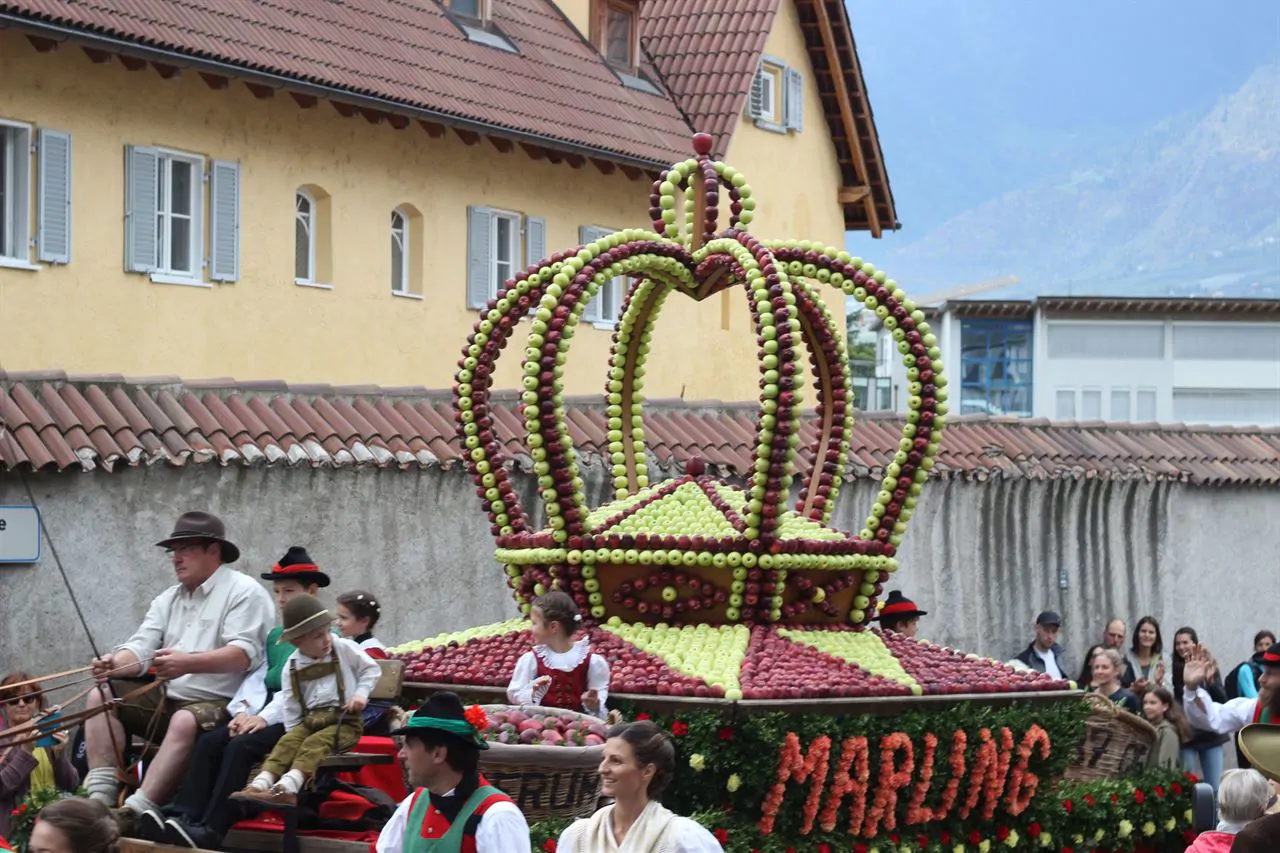
The Torggelen is the custom of the Isarco valley: from late September you walk up to a farmhouse, drink the new wine and eat chestnuts, speck and krapfen. It is not a festival with a date, it is a way of spending October afternoons. In the same weeks comes the Merano grape festival, held since 1886, with its floats and costumed bands.
The transhumance
Twice a year, in June and September, the flocks of Val Senales cross the glacier and the Giogo Alto at 3,200 metres to reach the pastures of the Otztal, in Austria, and come back. It is the highest alpine transhumance in Europe, it has been done for at least six hundred years, and since 2019 it has been Unesco intangible heritage. In every valley, at the end of summer, the herds then come down wearing crowns of flowers.
Winter and summer
The Marcialonga runs at the end of January for seventy kilometres between Val di Fiemme and Val di Fassa, with thousands of cross country skiers. In summer every village has its food fair and its band, and in the Ladin valleys there are shooting contests and costume festivals. The campsite noticeboards keep the calendar of whatever is happening nearby.