
The Dolomites
A sea floor two hundred and fifty million years old, lifted up and carved out.
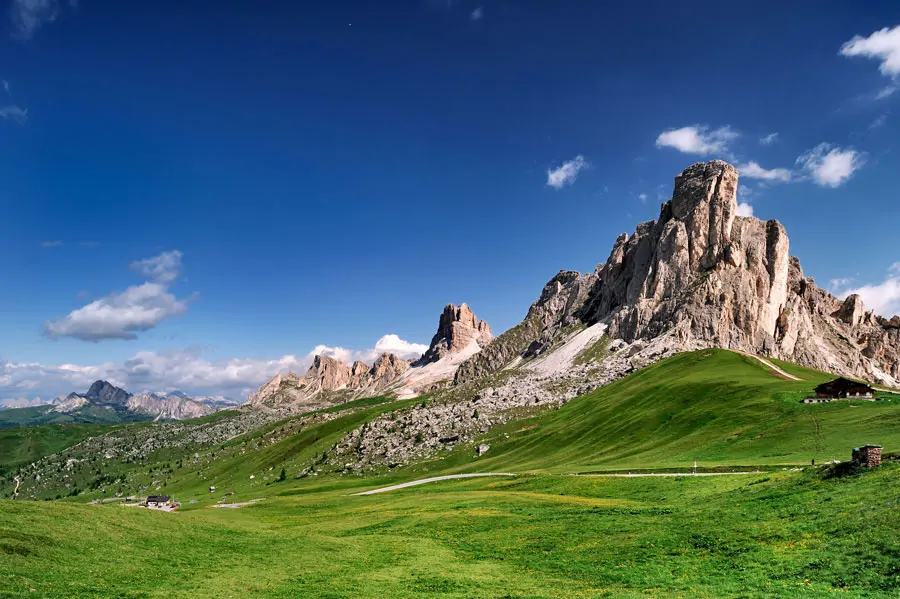
The Dolomites are not mountains like the others because they are not made like the others. The rock is dolomite, a carbonate formed on the bed of a shallow tropical sea; the alpine uplift carried it up to altitude and erosion, which on dolomite works by vertical collapse rather than by smoothing, gave it the towers, spires and sheer walls you see today.
They have been a Unesco site since 2009, in nine distinct systems across five provinces, and the citation speaks explicitly of the beauty of the landscape, which is rare in a list that usually rewards other things. Within the region are the Catinaccio, the Latemar, the Sassolungo, the Sella group, the Pale di San Martino and the Brenta Dolomites.
How to see them
You do not have to climb anything. The cable cars of Val Gardena, Val di Fassa and San Martino carry you to between two and three thousand metres in a few minutes, and from there high level paths set off that can be walked in trainers. The passes are reached by car: Sella, Gardena, Pordoi, Costalunga, Fedaia. From the Pordoi a cable car rises to 2,950 metres on the Sass Pordoi, and the view is the one everybody photographs.
The via ferratas and the huts
The via ferrata was invented here, and many of the routes follow the walkways of the 1915 war: they are done with a harness and a helmet, and they are not for everyone. The huts are many and well run, and in August they have to be booked. Alta Via number one, from Braies to Belluno, is the classic trek: six or seven days, all of it hut to hut.
Anyone camping in Val di Fassa, Val di Fiemme or the Pustertal has the Dolomites at the campsite gate. Anyone on Garda or in the Vinschgau has to allow two hours of driving, and is better off making a single full day of it than two half days.