
The upper Lake Garda
Olive trees at seventy metres above sea level, with two thousand metres of rock above them.
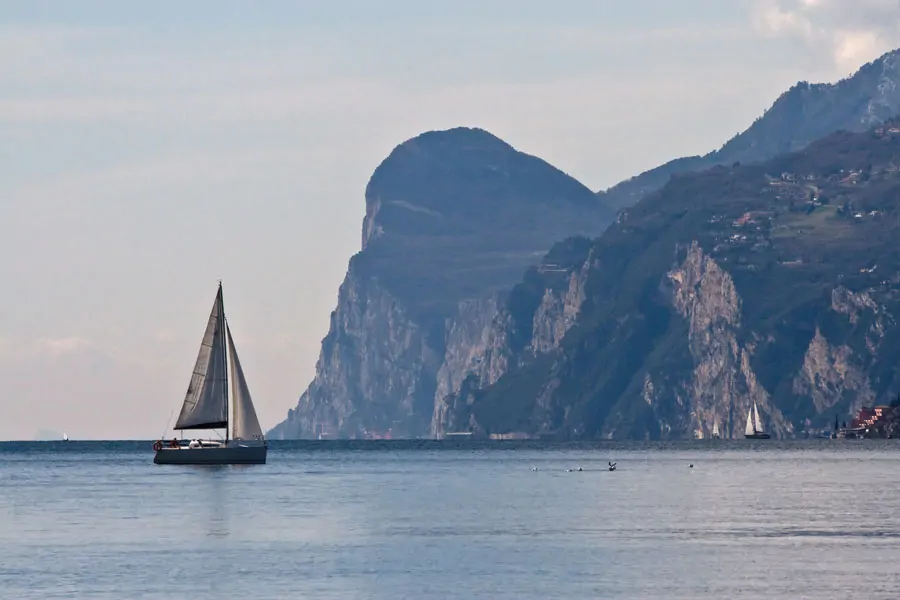
The northern tip of Lake Garda lies in Trentino, and it is the strangest place in the region: seventy metres above sea level, with olives, lemons and palm trees, and above it the walls of Monte Brione and the Rocchetta rising two thousand metres in the horizontal. The climate is Mediterranean because of the water of the lake, which in winter does not drop below seven degrees.
There are three towns: Riva del Garda, with its Venetian centre and the fortress standing in the water; Torbole, which is the town of the wind; and Nago above, with the giants' kettles scoured out by the glacier. Around them are a couple of dozen campsites, the densest concentration in the region.
The wind
The lake has two regular winds, and it always has: the Peler comes down from the north early in the morning, the Ora comes up from the south after midday and blows until evening. That regularity has made the upper Garda one of the most used places in the world for sailing and windsurfing, and Olympic teams train at Torbole. Anyone who does not sail can simply watch: at two in the afternoon the lake fills with sails in ten minutes.
What there is besides the water
The Garda cycle path runs along the shore; the old Ponale road, cut into the rock in the nineteenth century and now closed to cars, climbs towards Val di Ledro with the lake under your feet and takes about an hour. Above Riva are the crags, and the upper Garda is one of Europe's climbing destinations. The Varone waterfall, inside a roofed gorge, drops ninety eight metres and is best visited in the rain.
In Val di Ledro, twenty minutes above the lake, is the pile dwelling museum: the posts of a Bronze Age village, exposed in 1929 when the lake was lowered for a power station, and a Unesco site since 2011.